Building the Office of the Future

Return to office (RTO) is no longer a question of if, but how. Employees aren’t resisting the office because they dislike collaboration – they’re resisting offices that feel outdated, uncomfortable, unreliable, or poorly designed for modern work. Office workers do not want to return to desks, they want to return to an experience. The modern office must outperform the home on: collaboration, focus, comfort, and convenience.
The organizations winning RTO aren’t mandating attendance. They’re engineering an experience that beats working from home.
What “Office of the Future” Really Means
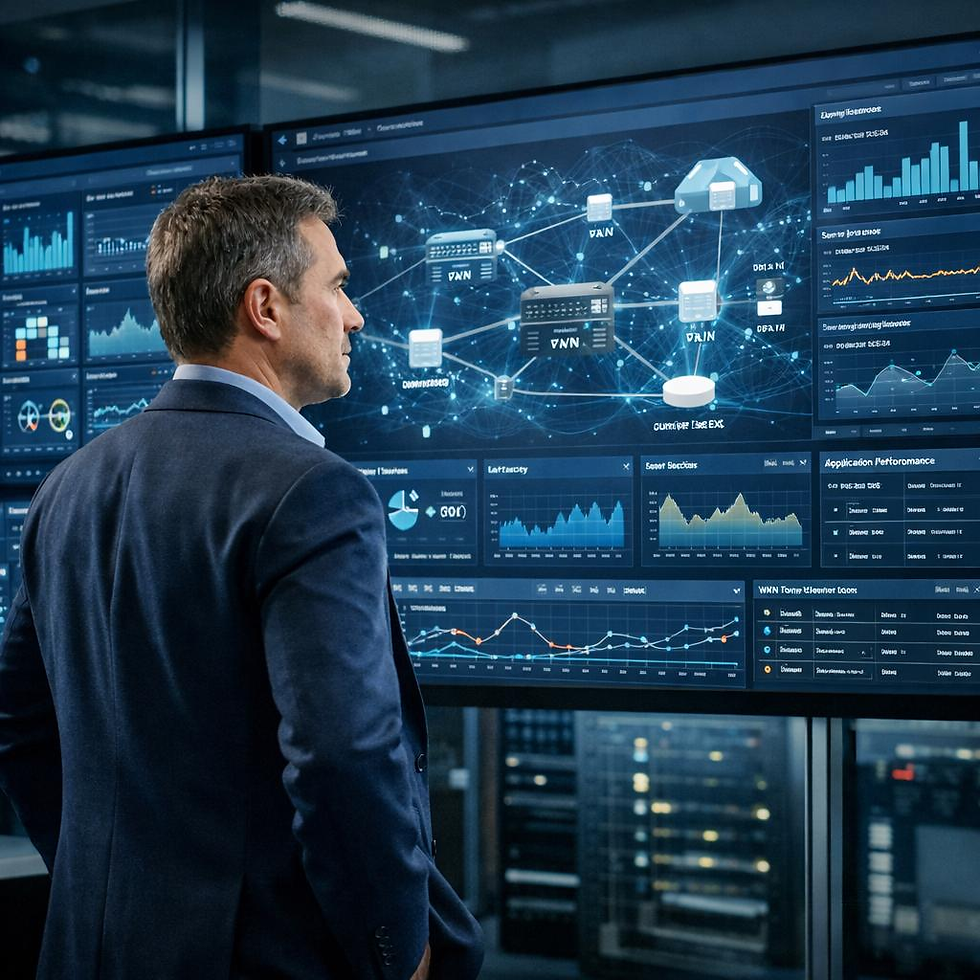
The office of the future is not a single product or platform. It’s a system of systems designed around outcomes. The office of the future isn’t futuristic. It’s measurable, adaptive, and data-driven — built on collaboration technology, environmental intelligence, space analytics, and a reliable IT backbone that makes the office frictionless to use.
At its core, it is a workplace that is:
Instrumented – sensors and platforms capture how space, air, and rooms are used
Adaptive – systems respond automatically to real conditions
Frictionless – booking, joining meetings, and accessing space just works
Secure by default – physical and digital security are integrated
Data-driven – decisions are based on usage data, not assumptions
Instead of guessing how people work, the modern office measures reality and improves it continuously.
Designing for Outcomes, Not Square Footage
Before deploying technology, organizations must define what success looks like. Most modern offices focus on three outcome categories:
1. Employee Experience
Reliable meeting rooms that start on time
Comfortable temperatures and clean air
Easy desk and room booking
Minimal friction when collaborating with remote teammates
2. Facilities & Operations
Understanding which spaces are over- or under-utilized
Right-sizing cleaning, maintenance, and energy usage
Reducing reactive support tickets
3. IT & Security
Standardized, supportable environments
Remote visibility into rooms and devices
Integrated access control, cameras, and monitoring
The best offices design backwards from these outcomes.
Pillar 1: Collaboration That Actually Works
Meeting rooms are the most visible success — or failure — of RTO.
Modern offices standardize collaboration spaces so employees don’t have to “re-learn” each room. A good baseline includes:
Small, medium, and large room templates
One-touch join for Virtual Meeting Platforms
Auto-framing or speaker-tracking cameras
Wireless content sharing for BYOD users
Centralized monitoring of room health
The real upgrade isn’t the camera — it’s operational visibility. IT teams now track:
Room utilization vs. bookings
No-show meetings
AV uptime and failure patterns
Mean time to resolution
When rooms are reliable, meetings start on time. When meetings start on time, the office earns trust.
Pillar 2: Space Intelligence and Usage Analytics
One of the biggest RTO surprises: booked does not mean used.
Modern offices deploy space intelligence to understand:
Desk occupancy in hoteling environments
Actual room usage vs. reservations
Traffic patterns across floors and zones
This data enables organizations to:
Reduce unused real estate
Add collaboration zones where demand is highest
Plan for peak RTO days (typically Tuesday–Thursday)
Align cleaning schedules to actual usage
Instead of designing for worst-case headcount, companies design for real behavior.
Pillar 3: Environmental & Wellness Technology
Air quality and comfort have become first-class workplace metrics.
Modern offices deploy environmental sensors that track:
CO₂ levels (ventilation effectiveness)
Temperature and humidity
Volatile organic compounds (VOCs)
Particulate matter (PM2.5) in sensitive environments
Noise levels (decibel-only, not recording)
These sensors integrate with building systems to:
Increase ventilation automatically when CO₂ rises
Alert facilities when zones are consistently too hot or cold
Reduce complaints by fixing issues before tickets are submitted
Organizations track KPIs like:
Time spent within comfort thresholds
Frequency and duration of air quality exceedances
Complaint volume mapped to specific zones
The result is a quieter, healthier office that employees feel — even if they don’t consciously notice the tech.
Pillar 4: Integrated Safety and Security
Security in the office of the future is embedded, not bolted on.
Modern deployments integrate:
Cloud-managed cameras with analytics
Mobile and badge-based access control
Visitor management with pre-registration
Emergency notifications and incident workflows
For employees, this means:
Faster access
Safer environments
Clearer communication during incidents
For operations teams, it means fewer disconnected systems and better auditability.
Pillar 5: Technology-Powered Office Amenities
Amenities are no longer just perks — they’re part of the productivity stack.
Popular smart amenities include:
Seamless guest Wi-Fi onboarding
Mobile credentials instead of plastic badges
Package and delivery room management
Digital signage and wayfinding
Wellness and focus room booking
EV charging management
The key insight: an amenity that doesn’t work is worse than no amenity at all. Reliability and uptime are the real employee benefits.
The Operational Backbone: Networks, Identity, and Visibility
None of this works without a strong foundation.
The office of the future depends on:
High-density wired and wireless networking
Network segmentation for users, guests, IoT, AV, and security
Centralized monitoring of devices and rooms
Identity-based access controls
Integration with IT service management platforms
This is where many projects fail — not because of sensors or cameras, but because the underlying network wasn’t designed for thousands of always-on devices.
Privacy, Trust, and “Don’t Make It Creepy”
Smart offices succeed only if employees trust them.
Best practices include:
Measuring space and environment, not individuals
Using aggregated, anonymized occupancy data
Clear signage and transparency
Defined data retention policies
Involving HR and legal early
The goal is experiencing optimization, not surveillance.
Cost, ROI, and the Business Case
Costs typically fall into:
Networking upgrades
Collaboration room hardware
Sensors and platform licensing
Access and security systems
Installation and managed services
ROI comes from:
Reduced real estate waste
Lower support ticket volume
Energy efficiency gains
Improved employee retention and productivity
Stronger security and compliance
The biggest mistake organizations make is trying to justify everything with headcount savings alone. Experience has value — and poor experience has a cost.
The office of the future isn’t about flashy tech. It’s about measuring reality, removing friction, and designing for how people actually work.
If the office can’t deliver better collaboration, comfort, and reliability than home, return to office will always feel forced.
Start small, instrument the space, prove value, then scale.
The companies getting it right aren’t mandating presence — they’re earning it.